The Cash Register Lie: Five Weekly POS Exports That Reveal Where Your Retail Margin Actually Goes
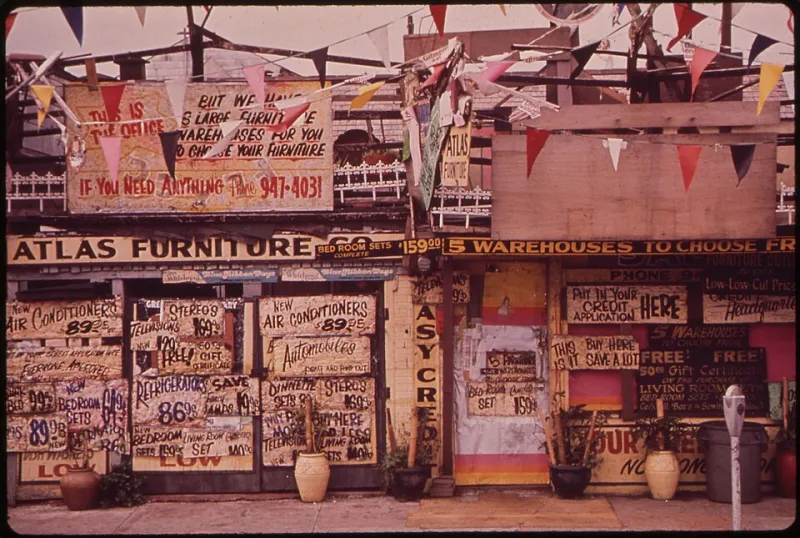
Photo: John Messina, Public domain, via Wikimedia Commons
Every point-of-sale system sold in the United States today — Square, Clover, Lightspeed, Toast for the food side, Shopify POS for the storefront hybrid — ships with reporting capabilities most owners never open. The terminal gets treated as an expensive cash drawer. That is a costly habit, because the same system that processed Tuesday's transactions also recorded which items actually made money, which ones sat untouched, and which hours your labor overlapped with revenue.
The good news: none of this requires a dashboard subscription, a data consultant, or a single line of code. It requires a weekly appointment with yourself and the export button you have been ignoring.
Report One: Margin by SKU, Not Revenue by SKU
Revenue is vanity; margin is survival. Most retailers can name their best-selling item but cannot name their most profitable one, and the two are frequently different products.
Export sales by item, then subtract unit cost. Sort by profit dollars, not units sold. In many gift shops, hardware stores, and boutiques, the top three profit contributors are not the top three sellers. A $12 item with a $9 margin can quietly outperform a $60 item with a $15 margin once volume is factored in.
What to do with it: reposition high-margin items closer to the register, and stop reordering low-margin volume sellers at the same depth. Twenty minutes, once a week.
Report Two: Dead Inventory Aging
Every store carries stock that has not moved in 60, 90, or 120 days. The POS export will name it precisely — item, quantity on hand, last sale date, dollars tied up.
The capital sitting in dead inventory is the cheapest financing available to a small retailer. Mark it down, bundle it, donate it for the tax deduction, or run a clearance table. The specific tactic matters less than the discipline of running the report every week and acting on the oldest cohort first.
Retailers who do this routinely report a side benefit: fresher assortments bring customers back more often, because the store never looks picked over.
Report Three: Repeat Buyer Cohorts
This is the report most owners assume requires marketing software. It does not. Export transactions with timestamps and, where your system captures them, customer identifiers — loyalty accounts, phone numbers, email receipts.
Group customers by the month of their first purchase, then look at how many bought again in the following 90 days. That single number, your repeat rate, is the most honest measure of whether the store experience works. A customer who returns three times in a quarter is worth several times a one-time walk-in, and the cohort view tells you whether recent changes — new hours, a remodel, a new product line — actually moved the needle.
Report Four: Staffing-to-Sales Timing
Compare hourly sales totals against scheduled labor. Most owners discover a mismatch in one direction or the other: Saturday afternoons are understaffed while Tuesday mornings carry payroll nobody earns.
The export is trivial — sales by hour for the week, side by side with the schedule. Look for hours where labor cost exceeds 25–30% of that hour's revenue, and hours where baskets were turned away or queues formed. Adjust the schedule, run the same comparison next week. This one report frequently pays for itself in a single payroll cycle.
Report Five: Payment Method Mix
Card brands, cash, mobile wallets, buy-now-pay-later — the mix affects your processing costs and your cash handling burden. Export it monthly at minimum, weekly if volume justifies.
Two things to check. First, what percentage of transactions are cash? If it has dropped below 20%, the daily bank run and the safe may be more ritual than necessity. Second, are high-fee card types dominating? The mix data gives you leverage when you renegotiate processing rates, and it tells you whether investing in contactless hardware was actually worth it.
The Routine That Makes It Work
The reports are worthless as a one-time exercise. The value comes from the cadence: same day each week, same five exports, fifteen to twenty minutes each, one decision per report written down before closing the spreadsheet.
Small retailers do not lose to big chains because of scale alone. They lose because the chains institutionalize looking at the numbers. Your POS already collected them. The only remaining step is reading what it has been trying to tell you.